
In the heart of northern Kenya, rising dramatically above the vast Samburu plains, stands Mount Ololokwe, also known locally as Ol Donyo Sabache. With its distinctive flat-topped summit, towering cliffs and surrounding wilderness, the mountain is one of Kenya’s most remarkable hiking destinations.
But Ololokwe is more than a beautiful mountain.
For the Samburu people, it is sacred ground. It carries cultural, spiritual and historical importance, making a hike here not simply an adventure, but an opportunity to experience the connection between people, nature and the landscape. (Mount Ololokwe Kenya – Adventure Begins)
A Mountain with a Story
Ololokwe rises from the semi-arid landscape of Samburu County, creating a dramatic contrast between the dry plains below and the greener environment found higher on the mountain.
The name Ololokwe is commonly associated with the idea of a “wide head,” reflecting the mountain’s broad, distinctive summit. Locally, it is also known as Ol Donyo Sabache. (Mount Ololokwe Kenya – Adventure Begins)
For generations, the Samburu have maintained a deep relationship with the mountain. Traditional practices associated with the mountain include prayers, blessings and rain-making ceremonies, while its water and highland environment have also been important to pastoral communities. (Mount Ololokwe Kenya – Adventure Begins)
This is why visitors should approach Ololokwe with more than hiking boots and a camera. The mountain deserves respect.
The Hike Begins at Sabache
Most hikes begin around Sabache Camp, at the foot of the mountain.
The first part of the trail takes hikers through a dry landscape characterized by rocky ground, shrubs and acacia vegetation. The terrain can feel hot and demanding, particularly during the middle of the day.
As the trail climbs higher, the landscape gradually changes. Rocky viewpoints open up across the Samburu plains, while the mountain’s vegetation becomes increasingly green and cool.
The ascent is steep in places, and hikers should have a reasonable level of fitness. Depending on pace, stops and route conditions, the complete hike can take roughly 5–8 hours round trip. (Mount Ololokwe Kenya – Adventure Begins)
From Dry Plains to a Green Summit
One of the most fascinating things about hiking Ololokwe is the dramatic change in environment.
At the bottom, you experience the hot, dry character of northern Kenya.
Higher up, the mountain becomes cooler and greener.
The summit plateau contains trees, vegetation and water sources that create an unexpected oasis above the surrounding semi-arid landscape. Historical accounts and hiking guides describe permanent springs and streams on the upper mountain, which help explain its importance to people and wildlife.
This transformation makes the climb feel like a journey through several different worlds.
Wildlife on the Mountain
Ololokwe is also part of a remarkable wilderness landscape.
Elephants are known to use trails on the mountain, particularly when moving toward water. Other wildlife in the wider area can include baboons, monkeys, dik-diks, rock hyraxes and other northern Kenyan species. Birdwatchers can also encounter a variety of raptors and other birds. (Mount Ololokwe Kenya – Adventure Begins)
Because this is a wilderness environment, hikers should always follow the instructions of their local guide and avoid approaching wildlife.
The Reward: The Summit
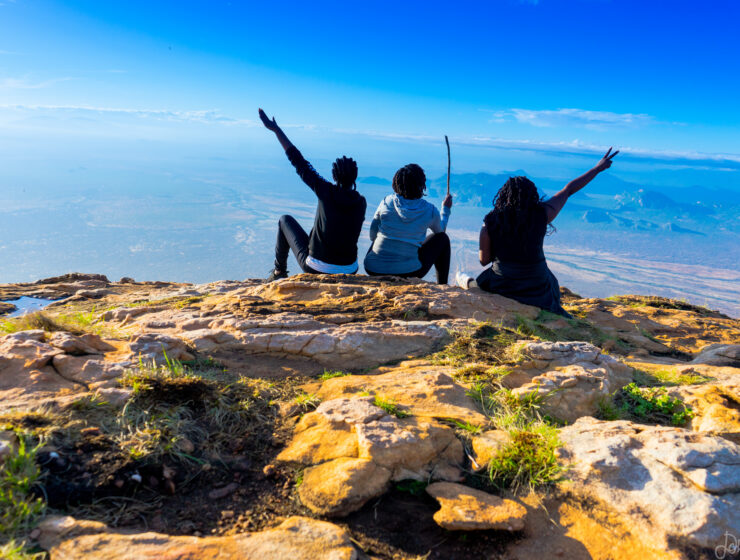
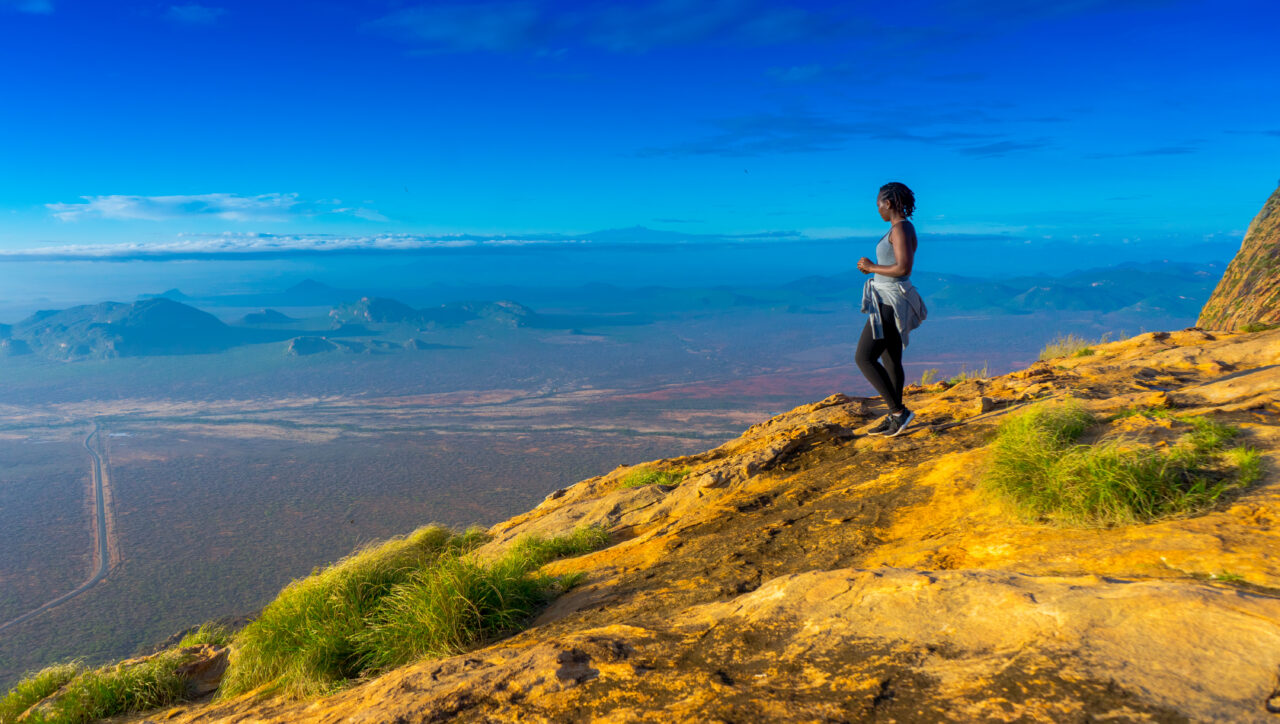
After the steep climb, reaching the top brings one of Ololokwe’s greatest rewards—the view.
From the summit, the Samburu landscape stretches into the distance, with rocky outcrops, plains and distant mountain ranges creating an extraordinary panorama.
For many hikers, however, the most memorable moment isn’t reaching the highest point.
It is simply sitting quietly at the edge of the summit and watching the landscape change beneath the morning or evening light.

For those who have more time, spending a night on the mountain can transform the experience.
A 2-day, 1-night Ololokwe adventure allows hikers to climb to the summit without rushing, enjoy sunset from the mountain and wake up early for sunrise.
At night, the remote location provides an opportunity to experience the northern Kenyan sky away from city lights.
Camping on the mountain should always be arranged with the appropriate local guides and permissions, particularly because of the mountain’s cultural importance. (Mount Ololokwe Kenya – Adventure Begins)
Hiking with Respect
Because Ololokwe is a sacred place for the Samburu community, responsible tourism is extremely important.
Visitors should:
- Follow instructions from local Samburu guides.
- Respect sacred and culturally sensitive areas.
- Ask permission before photographing people or ceremonies.
- Avoid damaging vegetation or trees.
- Carry all rubbish back out.
- Avoid unnecessary noise.
- Do not disturb wildlife.
- Respect local customs and traditions.
- Support locally operated guiding, camping and cultural experiences.
A visit should leave a positive impact on the community and the mountain.
More Than a Hike
Mount Ololokwe teaches an important lesson about travel.
A mountain can be a physical challenge, a source of water, a wildlife habitat, a cultural landmark and a spiritual place—all at the same time.
For the Samburu, Ololokwe is part of a much deeper relationship with their land. For hikers, it offers an opportunity to experience northern Kenya from a completely different perspective.
You don’t simply climb Ololokwe. You enter a landscape that has meaning.
And when you finally stand on the summit, looking across the endless Samburu plains, you begin to understand why this mountain has been respected for generations.
Plan Your Mount Ololokwe Adventure
Whether you choose a day hike from Nairobi, a 2-day summit camping adventure, or combine Ololokwe with a Samburu cultural experience and wildlife safari, the mountain offers one of northern Kenya’s most memorable outdoor experiences.
Come for the challenge.
Stay for the views.
Leave with respect for the mountain, the people and the land.