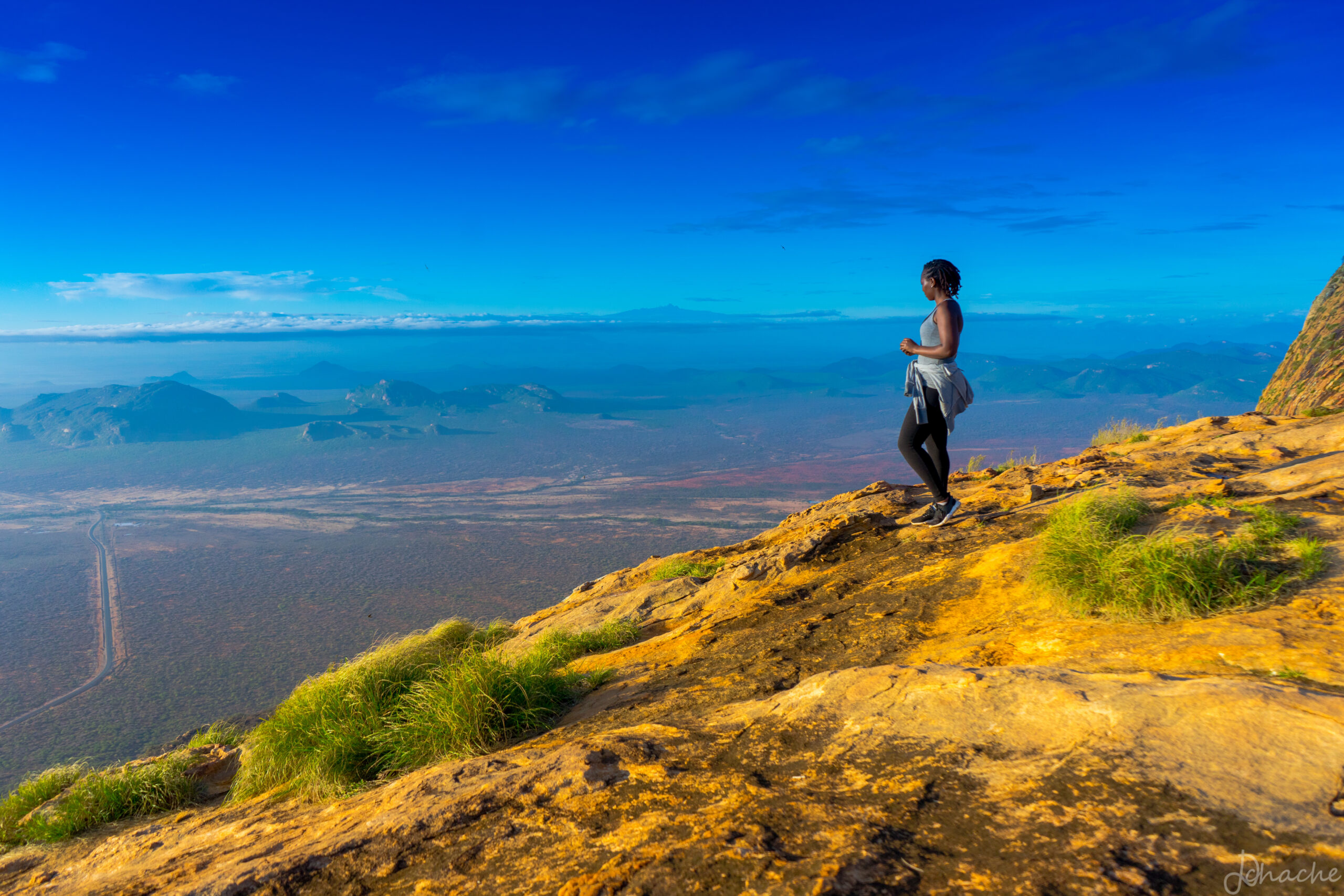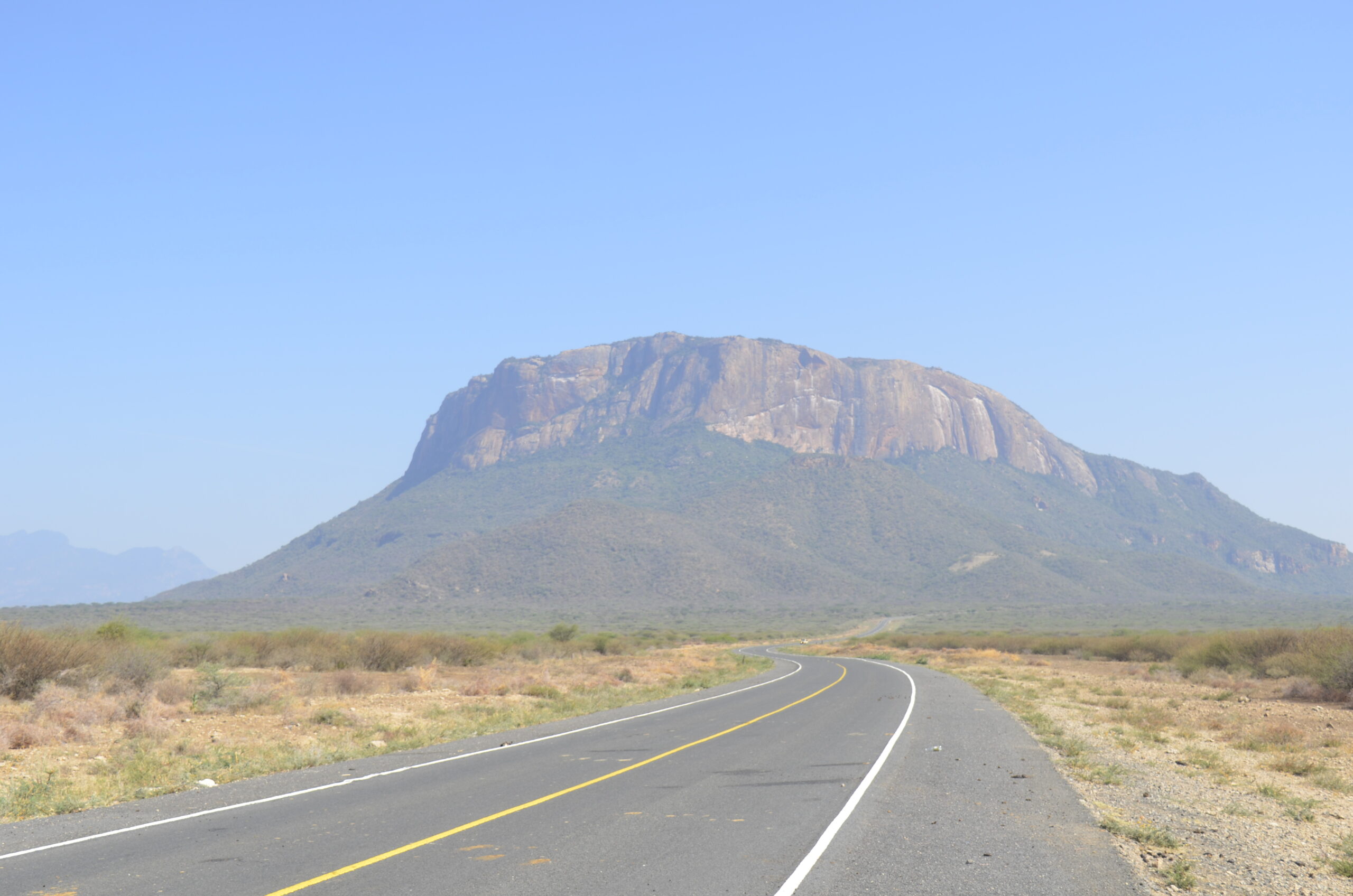


Mount Ololokwe, also known locally as Ol Donyo Sabache, is one of northern Kenya’s most distinctive hiking destinations. The mountain rises dramatically from the Samburu plains to an upper plateau of roughly 2,000 metres above sea level. The hike combines steep rocky terrain, indigenous forest, spectacular viewpoints, Samburu culture and, for those staying overnight, an unforgettable sunset, stargazing and sunrise experience.
🥾 What the Mount Ololokwe hike is like
The usual hike begins around Sabache Camp at the foot of the mountain. The lower section is relatively hot and dry, with rocky ground, shrubs and acacia vegetation. The trail becomes considerably steeper in the early part of the ascent, so a reasonable level of fitness is important.
As you gain elevation, the landscape changes. You pass rocky viewpoints overlooking the Samburu plains before reaching the greener summit plateau, where indigenous trees, springs and forest create a surprisingly cool environment compared with the dry lowlands. (Mount Ololokwe)
Typical hiking time:
- Ascent: approximately 3–4 hours
- Descent: approximately 2–3 hours
- Total hiking time: about 5–7 hours, depending on fitness, stops and route conditions. (Mount Ololokwe)
- Difficulty: Moderate to challenging
The trail includes steep and rocky sections, and some paths are traditional elephant trails. A local guide is strongly recommended, particularly because of wildlife, route finding and the cultural importance of the mountain.
🏕️ Mount Ololokwe camping
Camping overnight makes the experience much more rewarding because you don’t have to rush up and down the mountain in one day.
A typical 2-day/1-night summit camping experience can look like this:
Day 1 – Hike & summit camping
- Early morning departure from Nairobi/Nanyuki.
- Drive through Isiolo and Archer’s Post towards Sabache.
- Meet your local guide and organize water and camping equipment.
- Begin the ascent.
- Take breaks at scenic viewpoints.
- Reach the summit/upper camping area.
- Set up tents.
- Explore the summit and enjoy the views.
- Watch the sunset over the Samburu landscape.
- Dinner at camp.
- Stargazing and overnight in tents.
Day 2 – Sunrise & descent
- Wake up early for sunrise.
- Breakfast at camp.
- Short walk around the summit and viewpoints.
- Begin the descent.
- Return to Sabache Camp.
- Lunch/refreshment.
- Drive back towards Nanyuki or Nairobi.
Summit camping facilities can be very basic, so hikers should confirm the current camping arrangements and permissions with their local guide/operator before travelling. Mount Ololokwe is culturally significant to the Samburu community, so camping should be done with appropriate local permission and respect for local customs. (Mount Ololokwe)
🌅 Why camp overnight?
Camping gives you the opportunity to experience:
- 🌄 Sunrise from the mountain
- 🌅 Sunset over the Samburu plains
- ⭐ Clear northern Kenya night skies
- 📸 Excellent photography opportunities
- 🌿 Indigenous summit forest
- 🐦 Birdwatching
- 🪨 Dramatic cliffs and viewpoints
- 🤝 Interaction with local Samburu guides
- 🏕️ A genuine wilderness camping experience
🎒 What to carry for Mount Ololokwe
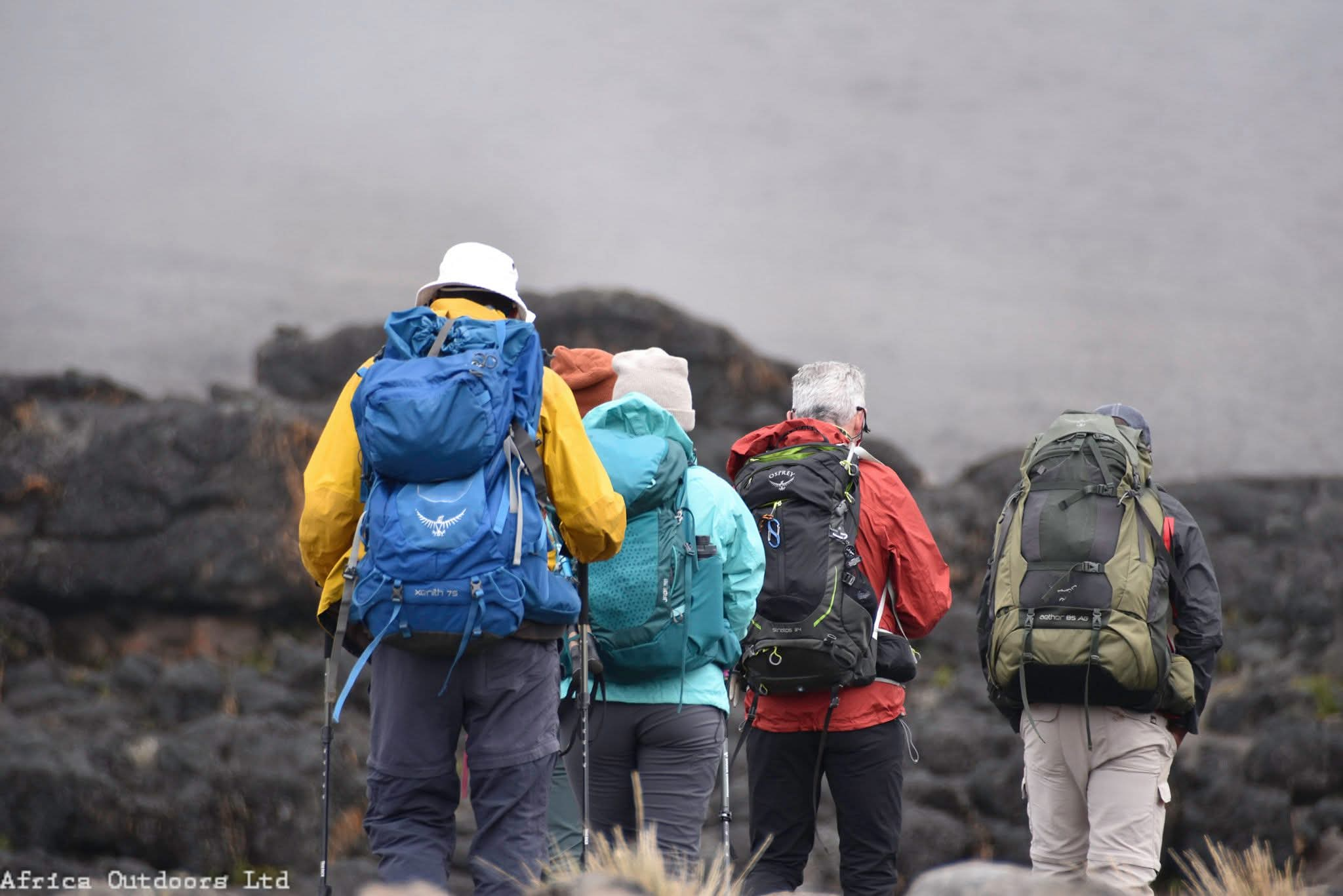
Essential hiking gear
- Good hiking boots with strong grip
- Comfortable hiking trousers
- T-shirts/base layers
- Fleece or warm sweater
- Warm jacket
- Hat/cap
- Sunglasses
- Sunscreen
- Lightweight rain jacket
- Trekking poles or walking stick
- Small hiking backpack
- Headlamp/torch with spare batteries
- Personal first-aid kit
- Personal medication
- Reusable water bottles/hydration bladder
💧 Water & food
Water is particularly important because the lower mountain can be hot and there are limited facilities around the trailhead. Different hiking accounts recommend carrying substantial water; for a demanding full-day hike, 3–5 litres per person may be appropriate depending on weather, individual needs and whether reliable treated water is available at camp.
Carry:
- Drinking water
- Electrolytes/rehydration salts
- Energy bars
- Nuts
- Fruits
- Chocolate
- Biscuits
- Packed lunch
- Extra snacks
Don’t rely on finding shops along the mountain. The area is remote and supplies should be arranged before starting the hike.
⛺ If camping overnight, also carry
If your tour operator does not provide camping equipment, bring:
- Tent
- Sleeping bag
- Sleeping mat
- Pillow or inflatable pillow
- Warm night clothes
- Headlamp
- Power bank
- Small towel
- Toiletries
- Toilet paper
- Hand sanitizer
- Personal rubbish bags
A good 3-season or 4-season tent and a sleeping bag around 0°C to -5°C comfort rating are reasonable options for summit camping, although actual conditions should be checked before the trip. (Mount Ololokwe)
🧴 Personal items
Don’t forget:
- Passport/ID
- Cash
- Phone
- Camera
- Power bank
- Lip balm
- Wet wipes
- Toothbrush and toothpaste
- Insect repellent
- Small quick-dry towel
- Extra socks
- Extra T-shirt
- Lightweight sandals for camp
🐘 Wildlife and safety
Mount Ololokwe is a wilderness environment. Hikers may encounter signs or sightings of elephants, baboons, rock hyraxes, klipspringers, monkeys and numerous bird species. (Mount Ololokwe)
For safety:
- Always hike with a local guide.
- Never approach or feed wildlife.
- Stay with the hiking group.
- Do not walk alone around camp at night.
- Keep food properly packed.
- Don’t leave food waste behind.
- Follow the guide’s instructions when wildlife is nearby.
- Avoid getting too close to cliffs and exposed edges.
- Carry enough water.
- Start early to reduce exposure to the midday heat.
🌦️ Weather and clothing
Samburu can be hot during the day, while the summit can become considerably cooler, especially at night and around sunrise. Layering is therefore the best approach. (Mount Ololokwe)
Day: lightweight, breathable clothing, hat and sunscreen.
Evening/night: fleece, warm jacket, long trousers and warm sleeping clothes.
Rainy conditions: waterproof jacket and suitable footwear, as rocky sections can become slippery.
🌿 Respect the mountain and Samburu culture
Mount Ololokwe has important cultural and spiritual significance to the Samburu community. Visitors should:
- Use authorized/local guides.
- Respect sacred areas.
- Ask before photographing people or cultural activities.
- Avoid damaging trees or vegetation.
- Do not leave rubbish.
- Do not make unauthorized fires.
- Keep noise to a minimum.
- Follow local instructions regarding camping.
The principle should be “take nothing but photographs, leave nothing but footprints.”
⭐ Recommended packing summary
For a day hike:
Hiking boots + 3–5L water + snacks/lunch + hat + sunscreen + sunglasses + rain jacket + warm layer + trekking poles + headlamp + first aid + phone/power bank.
For 2-day summit camping:
Everything above plus tent + sleeping bag + sleeping mat + warm night clothing + toiletries + extra socks/clothes + cooking/meal equipment if meals are not provided.
Best advice: Don’t overpack. Mount Ololokwe involves a steep ascent, and everything you carry has to be taken up the mountain. Pack only what you genuinely need and arrange porters/camping equipment in advance where available.