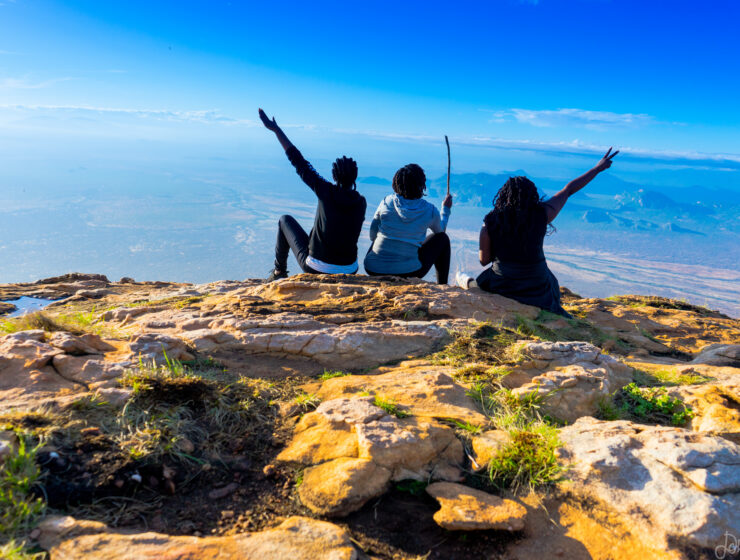
Ololokwe is commonly translated from Samburu as “wide head” or “broad head.” The name is generally understood as a reference to the mountain’s distinctive physical appearance—particularly its broad, rounded/flat-topped upper section. Several descriptions of the mountain independently give this interpretation.
In other words:
Ololokwe → “Wide Head” / “Broad Head”
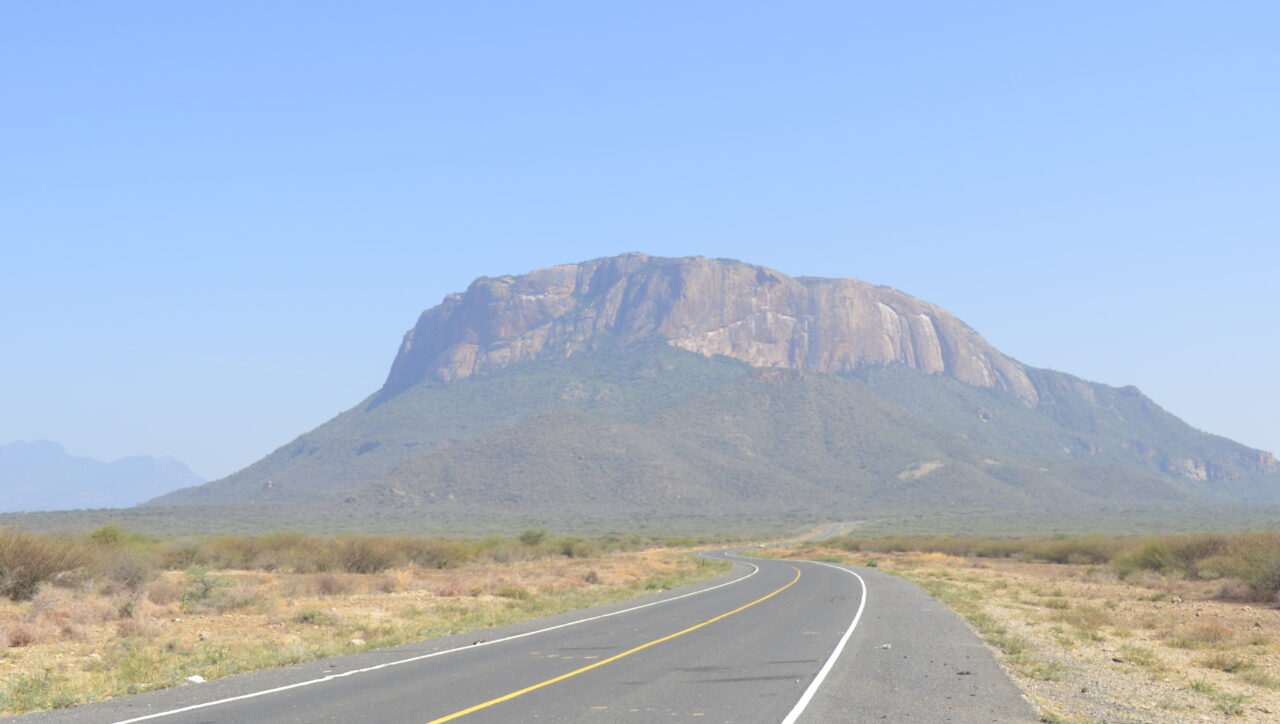
The name makes sense when you look at the mountain from the surrounding Samburu plains: its upper mass appears broad and rounded, almost like the “head” of a giant rising above the landscape.

But there is another important name: Ol Donyo Sabache
Mount Ololokwe is also commonly referred to as Ol Donyo Sabache. Nature Kenya identifies Ol Donyo Sabache as the same mountain as Mount Ololokwe and describes it as a sacred site and traditional place of prayer and ritual for the Samburu.
This is important because “Ololokwe” and “Ol Donyo Sabache” are not simply two English translations of the same word. They are names associated with the mountain in different contexts.
The cultural origin of Ololokwe
For the Samburu, Ololokwe is much more than a geographical landmark.
The mountain rises dramatically from the semi-arid plains and contains a relatively cool, forested highland environment and important water sources. Samburu County itself describes Ololokwe as one of the area’s mountain “islands” of indigenous forest surrounded by semi-desert.
This environmental contrast helps explain why the mountain has historically been so important to pastoral communities.
1. A sacred mountain
Ololokwe is regarded as a sacred mountain by the Samburu.
Nature Kenya describes Ol Donyo Sabache as a sacred site and says it has traditionally been used as a shrine for prayers and rituals.
Historical cultural documentation is even more revealing. A Samburu Photovoice project records a local Samburu ranger explaining that Ololokwe is considered one of the community’s holy mountains and that some Samburu houses have traditionally been oriented toward the mountain.
So the mountain isn’t sacred simply because it is visually impressive. It forms part of the Samburu cultural and spiritual landscape.
2. A place associated with prayer
Traditionally, mountains and elevated places can hold particular importance in Samburu spiritual life.
Sources describing Ololokwe report associations with prayer, blessings and traditional ceremonies, including ceremonies connected with rainfall.
This is particularly significant in Samburu because the surrounding region is semi-arid and pastoral livelihoods depend heavily on reliable water and pasture.
The mountain’s permanent or relatively reliable water sources therefore have both practical and cultural significance.
3. Water and survival
One of the most important aspects of Ololokwe is its relationship with water.
Although the landscape around the mountain can appear extremely dry, the mountain environment supports vegetation and water sources at higher elevations. Older accounts describe permanent springs on the mountain and water flowing from the summit area.
For pastoral communities, this makes the mountain extremely valuable.
During difficult dry periods, the mountain and its surrounding environment could provide:
- water
- pasture
- vegetation
- shelter
- wildlife
- medicinal plants
- a refuge for livestock
Recent reporting also notes that Samburu pastoral families have historically regarded the mountain as sacred while using its higher pastures during severe dry seasons.
Why the name “Wide Head” is appropriate
The physical geography is probably the easiest way for visitors to understand the name.
Imagine standing on the Samburu plains and looking toward the mountain.
Instead of a sharp pyramid-shaped peak, you see a large, broad upper mass with dramatic cliffs.
That appearance resembles a head or broad crown rising above the landscape.
Hence the commonly reported Samburu interpretation:
Ololokwe — “Wide Head.”
The mountain’s shape is therefore embedded directly into its name.
Ololokwe is more than a hiking destination
This is particularly important if you’re writing content for Mountololokwe.com.
It would be misleading to present Ololokwe simply as:
“A beautiful mountain that is good for hiking.”
The cultural story is much deeper.
For generations, the Samburu have had a relationship with the mountain involving land, water, livestock, spirituality, traditions and identity.
That is why visitors should approach the mountain respectfully.
Some tourism sources specifically describe Ololokwe as the Samburu sacred mountain, while local/community-based tourism initiatives emphasize obtaining permission and respecting the cultural significance of the site.